
Note for the Current Publication: Note for republishing. Long before Apple Vision Pro and Samsung’s response to it came along, I had…
Note for the Current Publication: Note for republishing. Long before Apple Vision Pro and Samsung’s response to it came along, I had prepared this article in 2018 for a magazine. Technological innovations emerge as the result of the efforts of thousands of people over decades. However, most of the time we think they enter our lives overnight through popular culture. I am publishing it here as well to illustrate the efforts that have brought those glasses we wear today to where they are now.
Beyond Reality: Augmented and Virtual Reality
What is reality? Is it the things we see with our eyes, hear with our ears, taste with our tongue, and touch with our hands? If a train that is plummeting off a cliff isn’t real, then why do we tense up as if it were, why does our heart rate increase, and why do we panic? And what if nothing we feel is actually real? Can we manipulate our perceptions? The answer is yes. But not the kind of manipulation done by Cambridge Analytica — which recently landed Facebook in quite a bit of trouble — and others like it.
I’m talking about wandering through completely different fabricated worlds while seated, traveling far and wide without leaving your chair, fighting in a fictional war, or driving a vehicle — or pointing our phone’s camera at the sky and seeing information about the airplane overhead, as well as the last photo that the person across from us posted on Instagram. I’m talking about all these experiences. Virtual reality and augmented reality.
There are two facets to this “beyond reality” concept: one is augmented reality, which involves enriching our view of the real world by overlaying it with digital information or virtual objects. The other is virtual reality, which consists of immersing the user in computer-modeled simulations of real or imaginary worlds, making them feel as if they are truly present in those environments. In augmented reality (AR), we still see our actual surroundings, but enhanced with additional data — for example, looking through your phone or AR glasses to get flight information of a plane in the sky or to see a social media profile floating next to the person in front of you. In virtual reality (VR), on the other hand, everything we see is generated by a computer; we shut out the physical world and enter a fully simulated one, engaging sights and sounds (and sometimes other senses) to create the illusion of a different place or scenario.
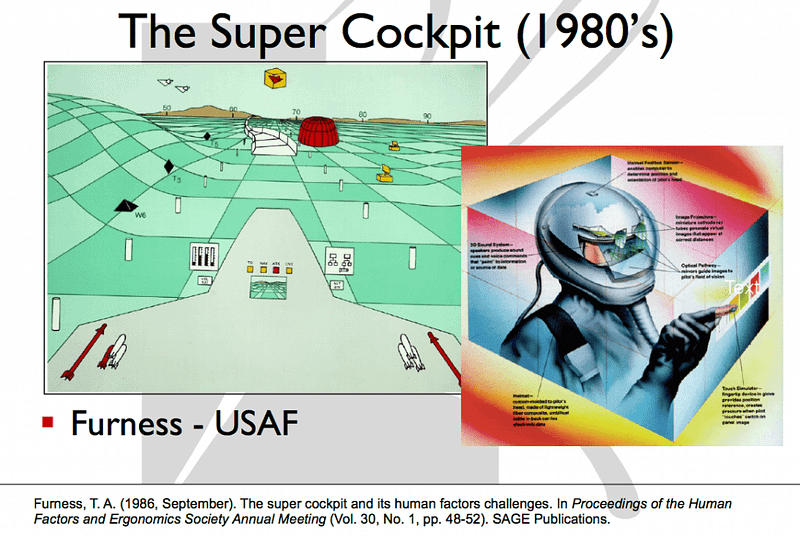
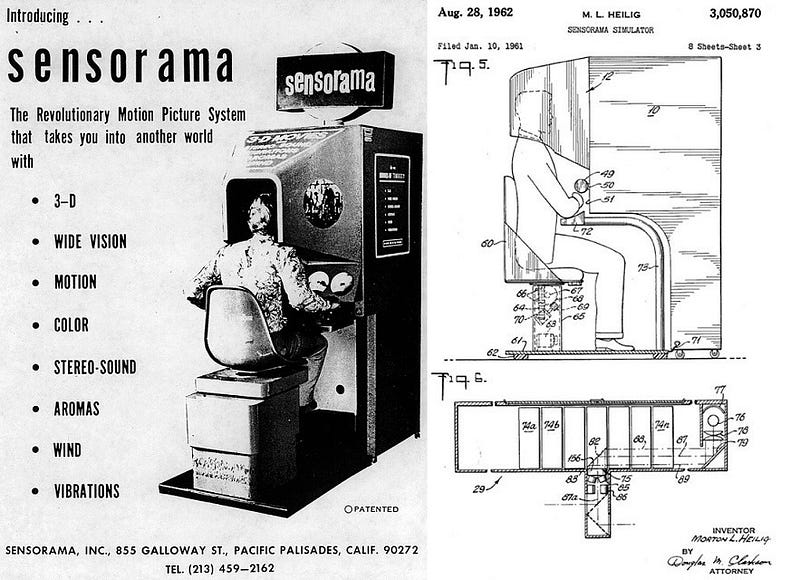
Although AR and VR have become buzzwords in recent years, the ideas behind them are not new at all. In fact, the first experiments in immersive simulation began as far back as the 1960s. Over the decades, countless engineers and visionaries have worked to turn these concepts into reality. Early virtual reality systems were extremely primitive — bulky contraptions in labs that would be unrecognizable compared to the sleek headsets of today. Flight simulators, for instance, are an early form of virtual reality that the aviation industry has used for training pilots for many years. For a long time, VR remained limited to such specialized contexts because the technology simply wasn’t ready for everyday use. It took improvements in computer processing power, display technology, and motion sensors over many years, contributed by thousands of people, to reach the point where we could convincingly blend the virtual with the real.
Fast forward to the 21st century: both VR and AR have made huge leaps thanks to these accumulated advances. One milestone moment was in the early 2010s when a new generation of virtual reality gear emerged from the work of passionate enthusiasts. A notable example is the Oculus Rift, a VR headset prototype that reignited interest in virtual reality around 2012. It was so promising that Facebook acquired the Oculus company in 2014, investing billions of dollars with the belief that VR would become a mainstream platform in the future. Around the same time, companies began exploring ways to bring augmented reality to consumers. In 2013, Google introduced Google Glass, an AR-enabled set of smart glasses that could display digital information in the wearer’s field of view. Google Glass was a bold step toward merging the digital and physical, but it also raised tough questions, especially about privacy. For instance, if everyone could walk around with glasses that recognize faces and pull up personal information (like that Instagram photo example), what would that mean for privacy and consent? In fact, when Google was working on the Glass project, this concern became a major topic of discussion. Many people weren’t comfortable with the idea of being recorded or identified anywhere at any time, and such public backlash was one of the reasons Google eventually pulled Glass from the consumer market.
The story didn’t end there, of course. Right after Google withdrew Glass from sale, another tech giant stepped up with a different take on augmented reality. Microsoft introduced the HoloLens in 2015, a visor-style device that projects 3D holograms into your view of the real world. This device, classified as a mixed reality headset, basically blends AR and VR: you see your actual environment, but with realistic virtual objects anchored in it, which you can interact with. Microsoft’s HoloLens showed that even if consumer smart glasses hit a bump in the road, the development of augmented reality continued apace, especially for professional and industrial applications. With HoloLens, scenarios like a technician seeing a holographic overlay of machine parts while repairing an engine, or an architect walking through a life-size hologram of a building design, became not just science fiction but something tangible.
On the consumer side, augmented reality found its breakout moment on smartphones. A turning point was Pokémon GOin 2016 — an insanely popular mobile game that had millions of people using their phone cameras to chase cute virtual creatures on the streets of their cities. It was a simple form of AR (overlaying a cartoon Pokémon on your real surroundings), but it introduced the masses to the idea of blending virtual content with the real world. All of a sudden, augmented reality wasn’t an obscure tech term; it was something you might see your friends and family using in daily life, through games, social media filters, or fun apps that let you, say, point your phone at an empty room and visualize a new couch in the space.
Virtual reality, for its part, has been gaining traction in the entertainment sphere, especially in video games. Today’s VR headsets — whether it’s the Oculus (now Meta) Quest, HTC Vive, Sony’s PlayStation VR, or others — allow users to step into immersive games and experiences, moving within virtual worlds that feel surprisingly convincing. When you wear a VR headset, it can transport you to a roller coaster, a battlefield, or even a serene underwater landscape. Remember that example of a train rushing toward a cliff? Modern VR can create such an intense illusion that even when you know you’re safely standing in your living room, your palms sweat and your heart races as the virtual train hurtles toward disaster. Our brains are easily tricked by compelling visuals and sound; intellectually we might realize “this isn’t real,” but our subconscious and our body often react as though it is. This effect is why VR has been dubbed an “empathy machine” by some filmmakers and journalists — it can put you in someone else’s shoes or in a situation that you could never experience in real life, and your mind processes it in a very personal way.
Beyond games and entertainment, VR and AR are beginning to change how we work and learn. In healthcare, for example, virtual reality is used to help surgeons practice complex procedures or to help patients cope with pain and phobias by placing them in calming virtual environments or recreating triggering scenarios in a controlled way. Augmented reality is being used in medicine to guide surgeons during operations — imagine an AR overlay highlighting a tumor beneath the surface of an organ in real-time, allowing for more precision. In education, students can take virtual field trips through VR — visiting ancient civilizations or the inside of a human cell in an interactive 3D experience — or use AR apps to visualize concepts, like seeing a 3D model of the solar system hovering over their textbook. Even in industry, these technologies are proving useful: architects and engineers employ VR to do virtual walk-throughs of buildings and products still in design, and factory workers use AR glasses to get live instructions or diagrams while assembling complex equipment.
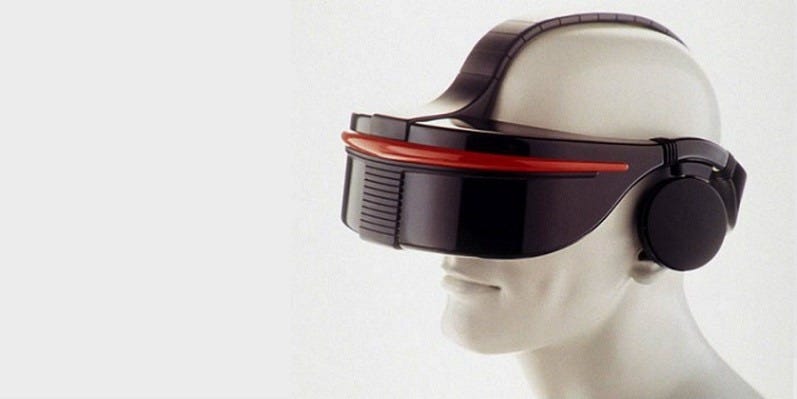
As with any emerging technology, there are challenges and limitations to overcome. VR headsets today, while much improved from a decade ago, can still be bulky and expensive, and some people experience motion sickness or discomfort in virtual environments. AR, when delivered through a phone, is widely accessible, but looking through a small screen is not the most seamless way to augment reality — the real promise of AR will be realized when we have lightweight glasses or contact lenses that can project information without a clunky device. Privacy and ethical considerations remain crucial, especially for AR: we have to establish norms and perhaps laws for what’s acceptable when you can record everything, or scan someone’s face and pull up their online data in an instant. These discussions started with Google Glass and will only intensify as the technology becomes more advanced and widespread.
Despite these challenges, the trajectory of AR and VR is clearly toward greater adoption and impact. Tech companies big and small are pouring resources into these fields. Aside from the examples already mentioned, Apple has been quietly investing in AR for years (you might have used AR features on an iPhone without even realizing it, such as the measuring tool that uses the camera), and many expect that eventually we’ll see everyday AR glasses from Apple or others. Facebook (now Meta) is focusing heavily on VR and what it calls the “metaverse,” essentially betting that a blend of virtual and augmented realities will define the next era of online interaction. In the next few years, we will likely see devices and applications that make these technologies even more commonplace. Some analysts have projected enormous market growth for AR and VR — with estimates of the industry being worth tens of billions of dollars within a few years — indicating that augmented reality, in particular, could become a part of our daily lives sooner than we think.
We are standing on the threshold of a new era where the line between the real and the virtual blurs. Think about it: our reality will no longer be just what is physically around us. With augmented reality, digital information and objects will pop up in our view of the world as if they are truly there. With virtual reality, we can step through a portal into any world we can imagine. In a sense, we are moving beyond reality as we know it. And just as it has taken decades of innovation to get to this point, the experiences to come will be built on further innovations and lessons learned along the way.
Beyond reality lies a realm of endless possibilities. Augmented and virtual reality allow us to reshape our perceptions at will — to add to the world or to create a whole new one. As these technologies continue to mature, they will profoundly alter how we interact with information, with our environment, and with each other. The journey that began in laboratories and fiction is now entering our daily lives. And it’s a journey that is far from over. With each new breakthrough, we step a little further past the boundaries of reality, exploring a future where, truly, anything we can envision can be made into an experience. In short, the world of augmented and virtual reality is the world beyond reality — and we are just beginning to discover what we can find there.